GRAP II Implemented in Delhi: Higher Parking Charges and Other Changes for Car Owners

Google News
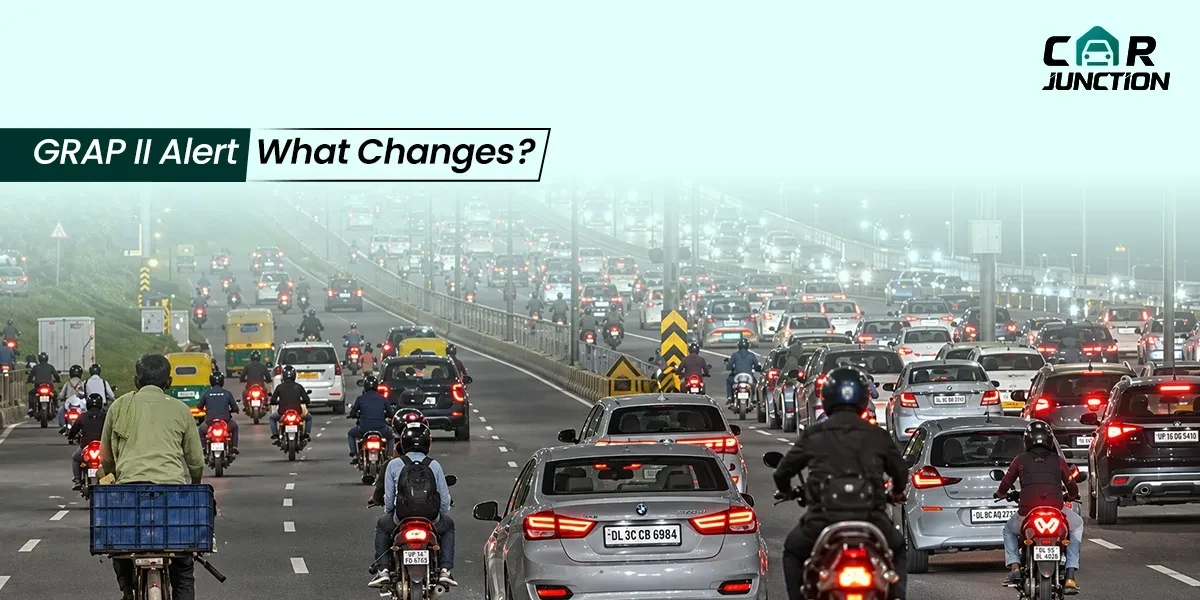
Table of Content

Summarize this blog post with:


Delhi NCR has moved to Stage II of the Graded Response Action Plan (GRAP) from November 2, 2026. The Commission for Air Quality Management (CAQM) introduced additional pollution control measures after Delhi's Air Quality Index (AQI) crossed 300.
The restrictions aim to discourage private vehicle use and reduce road congestion. For car owners, this means higher parking charges, stricter PUC checks and more public transport options. However, there is no blanket ban on private cars under GRAP Stage II.
GRAP II in Delhi: Higher Parking Charges for Car Owners
One of the biggest changes under GRAP Stage II concerns parking fees. Authorities have directed agencies to increase parking charges across Delhi NCR. The move aims to discourage people from using private vehicles for daily commutes.
This could increase the daily travel expenses of car owners who regularly park at public parking facilities. Office commuters who drive to work may need to reconsider their daily travel arrangements.
The CAQM has also asked authorities to consider staggered office timings. This applies to government offices and municipal bodies across Delhi, Gurugram, Faridabad, Ghaziabad and Gautam Buddha Nagar.
Staggered timings could spread traffic across different hours and reduce peak hour congestion. However, these changes are subject to decisions by the respective authorities.
More Metro Services and Public Transport Options
The government is also looking to improve public transport services. The objective is to encourage commuters to leave their private vehicles at home.
The Delhi Metro Rail Corporation (DMRC) has announced 20 additional weekday train trips from November 3. This takes the total number of additional daily trips to 40 across its network.
Authorities have also been directed to increase the frequency of RRTS, CNG buses and electric buses. These measures could offer more commuting options for people travelling between Delhi and neighbouring NCR cities.
Traffic police will also strengthen deployment at busy intersections. Motorists can expect closer monitoring of traffic movement and vehicle related pollution violations.
Older Petrol and Diesel Cars Face Separate Entry Restrictions
Apart from GRAP Stage II, Delhi has introduced separate restrictions on vehicles entering the capital.
From November 1, petrol and diesel vehicles registered outside Delhi without BS VI compliance cannot enter the city. This includes BS IV and older vehicles. The restriction will remain effective until January 31, 2027. CNG and electric cars, along with specified emergency and essential service vehicles, are exempt.
Delhi registered vehicles are also exempt from this particular entry restriction. However, BS VI vehicles entering Delhi must carry valid PUC certificates.
This rule is particularly important for daily commuters travelling from Noida, Gurugram and Ghaziabad. Authorities will use automatic number plate recognition (ANPR) cameras at border checkpoints.
What Else Should Motorists Know?
GRAP Stage II also brings stricter enforcement of existing pollution control measures.
Car owners should keep these points in mind:
- Valid PUC certificate: Authorities will intensify checks on vehicle emission certificates.
- Polluting vehicles: Officials will take action against visibly polluting vehicles.
- Parking expenses: Higher parking charges could increase daily commuting costs.
- Public transport: Additional Metro services offer an alternative to driving.
- Carpooling: Authorities have advised commuters to share rides wherever possible.
GRAP Stage II does not stop private car owners from driving in Delhi. However, higher parking fees and stricter pollution checks could affect daily travel. Commuters travelling from NCR should also check their vehicle's emission standard before entering Delhi.
Car Junction Insights
In my opinion, GRAP II is a necessary step, but its impact on daily commuters will depend on proper implementation. Higher parking charges alone may not convince people to stop using private cars. Better public transport frequency, reliable last mile connectivity and stricter pollution checks are equally important for cleaner Delhi roads.
Also Read | Does Car Insurance Cover Flood and Storm Damage?

Written by
Saurav SumanSaurav Suman is an Automobile Content Writer with over 2 years of experience covering the Indian automotive industry. Writing for Car Junction, he covers car launches, EV technology, hybrid powertrains, vehicle specifications, performance analysis, feature…
Read more about Saurav Suman →
Tata Altroz vs Maruti Baleno: 5 Reasons to Choose the Tata Hatchback
Nov 12, 2026

Bharat Mobility Global Expo 2027: Dates, Venue, Registration and Key Details
Nov 12, 2026

Denza D9 Teaser Out Officially: Luxury Design & Cabin Details Revealed
Nov 12, 2026

Two Mahindra Vision S Test Mules Spied at Traffic Stop with LED Lighting
Nov 11, 2026

Mahindra Bolero's 5 Biggest Strengths That Make It Popular
Nov 7, 2026

Maruti Dzire Dimensions: Boot Space, Length and Legroom Compared
Nov 11, 2026

How Technology-Loaded Cars Are Redefining the Real Cost of Ownership?
Nov 11, 2026
Popular Cars




Chery iCar V23
₹ 20.00 Lakh* onwards