
The Ultimate Car Maintenance Checklist for Beginners: What to Check and When

Google News
Table of Content

- Why a Car Maintenance Checklist is Important
- The Ultimate Car Maintenance Checklist (By Time Interval)
- Car Service Checklist- What is Covered at Official Service Visit?
- Understanding Your Dashboard Warning Lights
- DIY Maintenance vs When You Need a Car Technician
- How Much Does Car Maintenance Cost? (Approximate Price Guide)
- Signs Your Car Needs Repair Immediately
- Choosing a Reliable Car Repair Service
- Seasonal Maintenance Tips
- Common Beginner Mistakes to Avoid
- Conclusion
- FAQs About Car Maintenance
Summarize this blog post with:


Owning a car isn’t just refuelling it and driving off. Regular checks stop breakdowns, keep you safer and dodge expensive repairs.
A checklist makes this easy, especially on your first car. It tells you what to inspect every week, what needs a look every few months, and when to go to a service centre.
In India, changing weather, dusty roads, heavy traffic and constant stop and go wear a car down. So watch your tyres, engine oil, brakes, coolant and battery.
You don’t need to be a mechanic for the basics. But knowing when to call a technician matters just as much. Here’s the guide.
Why a Car Maintenance Checklist is Important
Regular maintenance keeps the important parts working. It also catches small problems before they turn into big bills.
Correct tyre pressure, clean filters and timely oil changes support better fuel efficiency. Regular servicing protects resale value and road safety too.
Schedules differ between petrol, diesel, CNG, hybrid and electric cars. So follow the owner’s manual. Don’t treat a general checklist as a fixed service schedule.
Honestly, the manual is the most ignored book in any car. But you should read it.
The Ultimate Car Maintenance Checklist (By Time Interval)
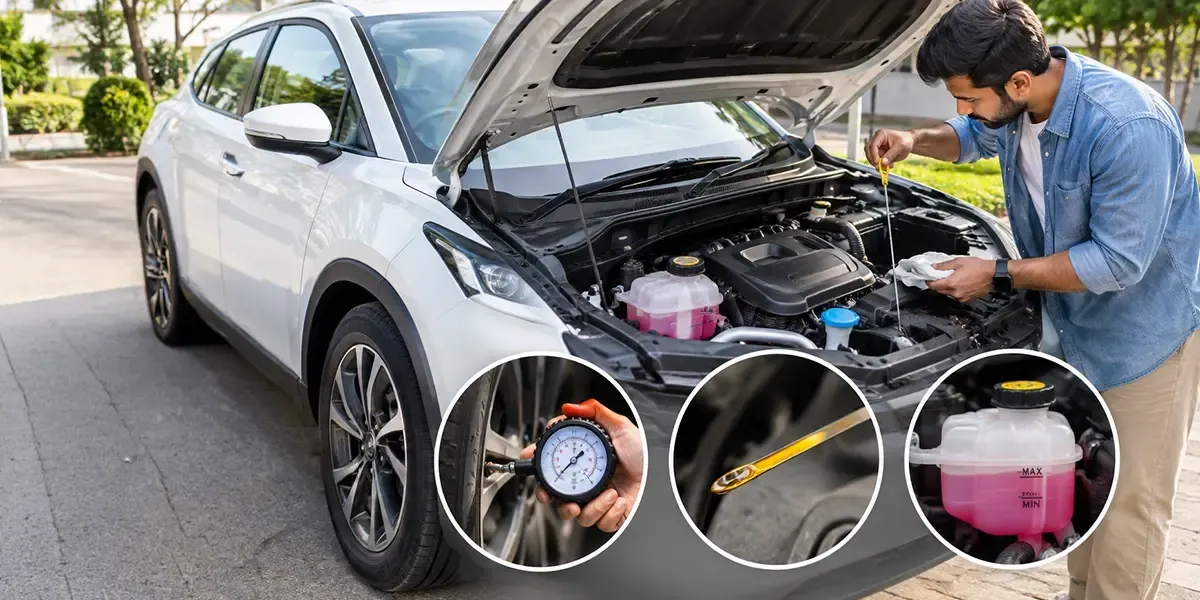
A simple routine shows you how your car is doing. The table below covers common checks and tells you which ones you can handle yourself.
|
Interval |
What to Check |
Who Can Do It |
|
Weekly |
Tyre pressure, tyre condition, lights, visible leaks and dashboard warnings |
DIY |
|
Monthly |
Engine oil level, coolant reservoir, battery terminals, wipers and air filter condition |
DIY |
|
Every 3–6 months |
Brake pads and discs, steering, suspension, tyre wear and rotation |
Technician recommended |
|
Every 6–12 months |
Scheduled oil and filter changes, brake fluid, wheel alignment and cabin filter |
Technician recommended |
|
Every 12–24 months |
Spark plugs, transmission fluid, timing belt and other scheduled replacements |
Technician required |
These are general inspection intervals, not universal replacement deadlines. Follow your manufacturer’s time and kilometre based schedule.
1. Weekly Checks
- Tyre pressure: Check all four tyres when they’re cold. Use the pressure on the driver’s door sticker or in the owner’s manual.
- Tyre condition: Look for cuts, cracks, punctures and uneven tread wear.
- Lights: Headlights, brake lights, indicators and hazard lights.
- Fluid leaks: Peek under the parked car for unusual oil or coolant leaks.
- Dashboard warnings: Start the engine and see if any warning light stays on.
My take: do this on a Sunday morning, before the car moves. It takes minutes.
2. Monthly Checks
- Engine oil: Check the level on the dipstick, if your car has one. Top up only with the recommended grade.
- Coolant: Check the reservoir when the engine is completely cool. Never open a hot radiator cap.
- Battery: Look for corrosion around the terminals. Watch for starting difficulties.
- Wiper blades: Replace blades that leave streaks or make odd noises.
- Air filter: Inspect the engine air filter for excess dust and dirt.
With dusty Indian roads, I’d never skip that air filter look.
3. Checks Every 3–6 Months
Ask a technician to inspect the brake pads, discs, steering and suspension. Unusual noises, vibrations or uneven tyre wear need attention too.
Whether you need tyre rotation comes down to your vehicle and the tyre maker’s advice. It spreads wear more evenly across the tyres.
I’d never put off the brake check. It’s the one item here where waiting costs you the most.
4. Checks Every 6–12 Months
Follow the manufacturer’s schedule for engine oil and filter replacement. The interval varies with the engine, oil grade and your driving conditions.
Check the cabin air filter, brake fluid and wheel alignment as well. Replace or adjust parts only when the schedule or an inspection says so.
Fair warning: a workshop that wants to replace everything at every visit deserves a second question.
5. Checks Every 12–24 Months
Spark plugs, transmission fluid and timing belts follow their specified replacement intervals. Some parts last far longer than two years.
Don’t replace them just because a generic checklist names them. Your owner’s manual has the right schedule.
Car Service Checklist- What is Covered at Official Service Visit?
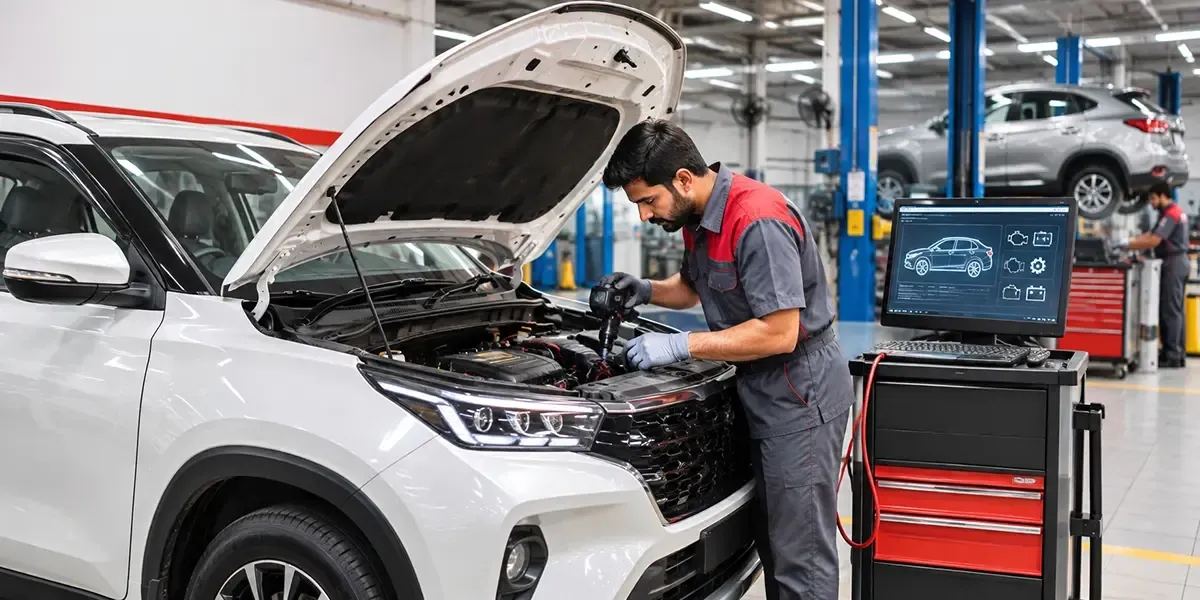
A scheduled service is more than an oil change. The service centre checks key components, spots wear and replaces parts when needed.
Most manufacturers run kilometre based or time based schedules. Some give free scheduled services in the early ownership period. But free usually means free labour, not every consumable or part.
Toyota India is a good example. It lists free maintenance visits at set mileage and time intervals. Its terms say labour is free, while lubricants, consumables and parts are chargeable.
|
Service Stage |
Typical Inclusions |
|
First service (around 1,000 km, where specified) |
General inspection, initial checks and adjustments |
|
10,000 km service |
Engine oil and filter, brake inspection and general checks |
|
20,000–30,000 km service |
Filter inspection or replacement, brake and suspension checks, scheduled fluid checks |
|
60,000 km service |
Major scheduled inspections and replacements as specified by the manufacturer |
What should beginners remember? Your first service is due after one month or a specified distance, whichever comes first. Some manufacturers follow different schedules. Check your service booklet before booking.
A 60,000 km service can involve spark plugs, filters, transmission fluid, coolant or other parts. Which ones get replaced depends on your specific vehicle.
I’d ask for the job list in writing before paying. Simple, and it avoids arguments later.
Understanding Your Dashboard Warning Lights
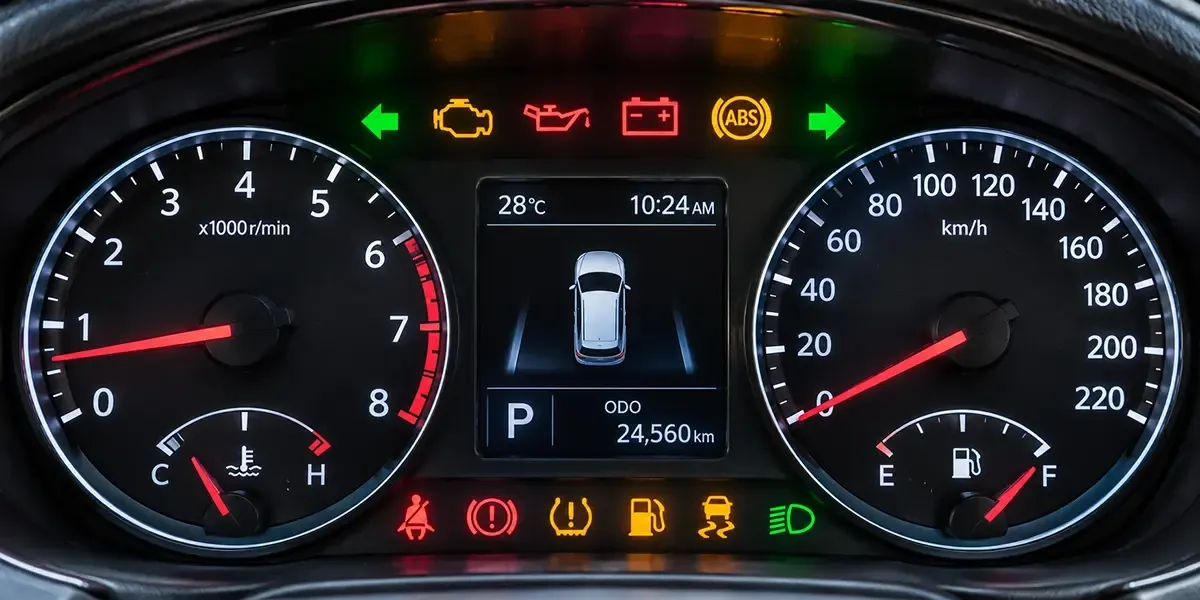
Warning lights tell you when your car needs attention. Their colours tell you how fast to react.
- Red lights: Usually mean an urgent problem. Think oil pressure, brake system and engine temperature warnings. Stop safely when necessary and follow the owner’s manual.
- Amber or yellow lights: Something needs attention. Common ones are the check engine light, ABS warning and tyre pressure warning.
- Green or blue lights: A feature is running. Headlights, indicators and high beam lights fall here.
Never ignore a flashing check engine light or a red warning. If the car behaves oddly, stop safely and call a professional.
Blunt view: a red light isn’t a “get home first” situation.
DIY Maintenance vs When You Need a Car Technician
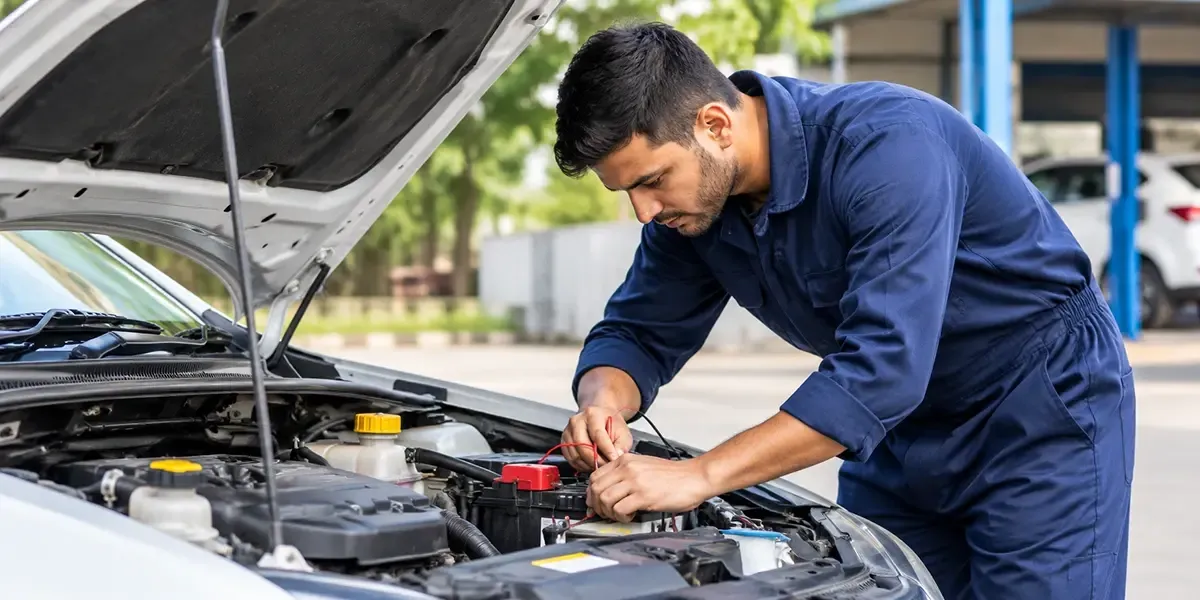
Beginners can handle several basic tasks without visiting a workshop. Mechanical repairs are different. They need proper tools, training and safety precautions.
|
Safe to DIY |
Needs a Professional Technician |
|
Checking tyre pressure |
Brake pad and disc replacement |
|
Checking engine oil and coolant levels |
Timing belt replacement |
|
Replacing wiper blades |
Wheel alignment and balancing |
|
Checking lights and indicators |
Transmission repairs |
|
Inspecting the air filter |
Brake fluid replacement |
|
Cleaning accessible battery terminals |
Suspension and steering repairs |
Basic checks save time and teach you how your car behaves. But don’t open electrical components or work underneath the vehicle without proper equipment.
And never add random fluids. The wrong oil, coolant or brake fluid can damage components. Unsure? Ask a trained technician.
My take: stick to the left column and you’ll be fine.
How Much Does Car Maintenance Cost? (Approximate Price Guide)
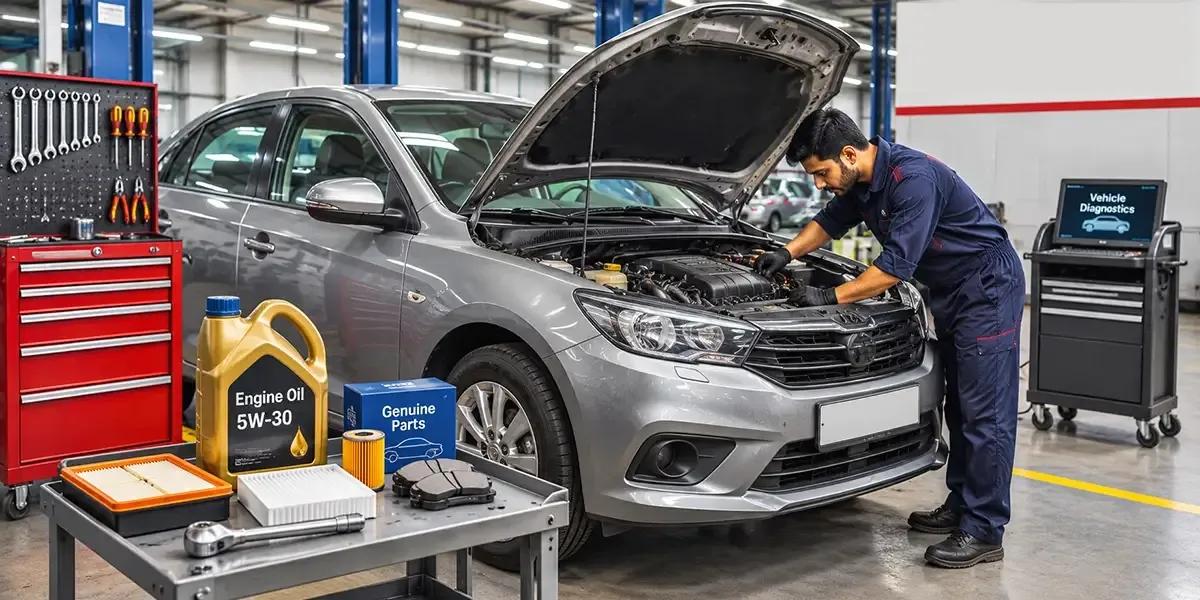
Maintenance costs in India vary with the vehicle, engine type, city and workshop. Authorised service centres may charge more than local garages, particularly for labour and genuine parts.
The figures below are indicative estimates for common mass market petrol and diesel cars. They aren’t fixed manufacturer prices.
|
Service Item |
Approximate Cost in India |
|
Engine oil and filter change |
Rs. 1,500–3,500 |
|
Brake pad replacement (per axle) |
Rs. 2,500–6,000 |
|
Wheel alignment and balancing |
Rs. 800–2,000 |
|
Tyre rotation |
Rs. 200–500 |
|
General car service |
Rs. 3,000–7,000 |
A luxury car, automatic transmission or specialised engine can increase these expenses considerably. Ask for a written estimate before approving additional repairs.
One important trade off is that authorised service centres can cost more. However, they generally offer manufacturer specific procedures, genuine parts and service records.
Signs Your Car Needs Repair Immediately
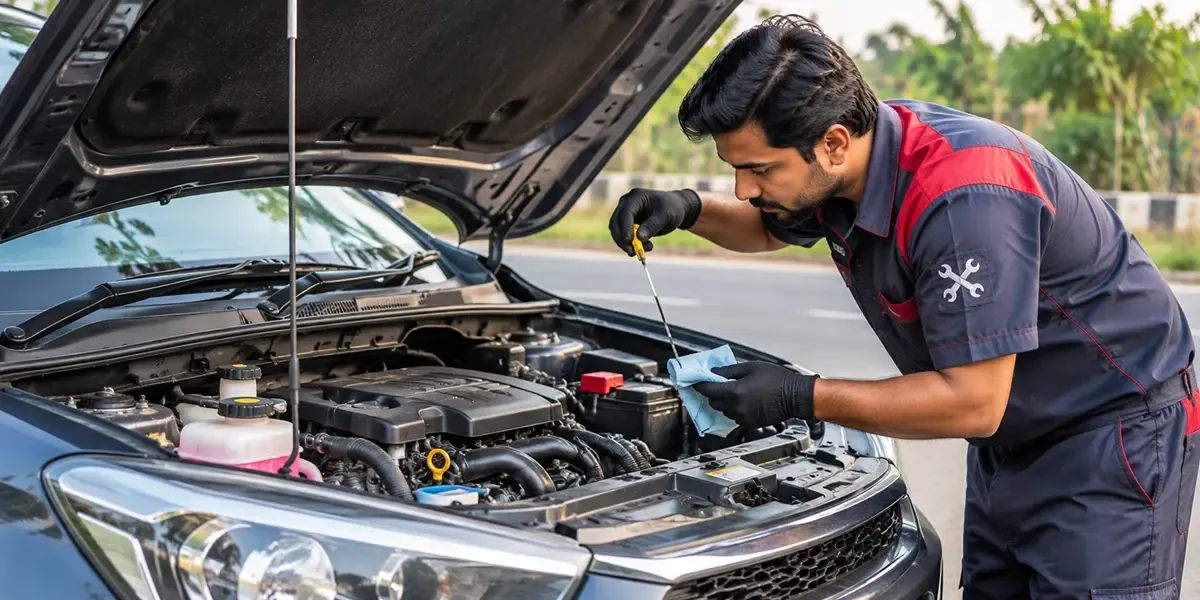
Routine maintenance and car repair are not the same. Some warning signs indicate an existing problem that needs immediate attention.
Look out for these symptoms:
- Red dashboard warning lights that remain illuminated.
- Grinding or squealing noises while braking.
- Unusual steering vibrations or excessive vehicle pulling.
- Sudden drops in fuel efficiency.
- Smoke from the exhaust or visible fluid leaks.
- Engine overheating or difficulty starting.
Do not continue driving if the brakes fail, the engine overheats or the oil pressure warning appears. Stop safely and contact roadside assistance or a qualified technician.
Choosing a Reliable Car Repair Service
Choosing the right workshop is important for your car's long term condition. Beginners should compare authorised service centres and independent garages before making a decision.
Check whether the workshop employs trained technicians and uses suitable replacement parts. Ask for a written quotation that separates labour charges, parts and additional work.
Also, confirm whether the repair comes with a warranty. Avoid workshops that recommend expensive replacements without explaining the actual problem.
For cars under manufacturer warranty, check the warranty conditions before choosing an independent garage. Incorrect repairs or unsuitable parts may affect warranty coverage.
Seasonal Maintenance Tips
Indian weather can affect your car differently throughout the year. A few seasonal checks can help prevent common problems.
- Summer: Check coolant levels, air conditioning performance and tyre pressure. High temperatures can also affect battery health.
- Monsoon: Inspect wiper blades, tyre tread depth, headlights and electrical components. Ensure the front and rear defoggers work properly.
- Winter: Check battery condition, engine oil specifications and headlight alignment. Also inspect the heater and defogger before longer journeys.
Avoid checking or opening the coolant reservoir when the engine is hot. Always allow it to cool completely.
Common Beginner Mistakes to Avoid
New car owners often overlook small maintenance tasks. These mistakes can eventually lead to expensive repairs.
Here are five common mistakes to avoid:
- Ignoring warning lights: Dashboard warnings often provide early signs of mechanical or electrical problems.
- Skipping oil changes: Old engine oil loses its ability to protect moving components properly.
- Using incorrect fluids: Always follow the recommended engine oil, coolant and brake fluid specifications.
- Incorrect tyre pressure: Overinflated or underinflated tyres can affect grip, handling and tyre life.
- Not maintaining service records: Keep invoices and service records to track maintenance and support resale value.
Another common mistake is following generic internet advice instead of the manufacturer's maintenance schedule.
Conclusion
Regular maintenance does not have to be complicated or expensive. A simple car maintenance checklist can help beginners keep track of essential checks and scheduled services.
Start with tyre pressure, engine oil, coolant, brakes and dashboard warnings. Leave complicated mechanical work to trained technicians.
Remember that every car has different maintenance requirements. Follow the owner's manual and address unusual symptoms early. Consistent care can help your car remain safe, reliable and economical for years.
Whether you drive a manual or automatic car, knowing its key differences can help you make informed maintenance decisions-discover the pros and cons of manual and automatic cars.
FAQs About Car Maintenance
What should be included in a car maintenance checklist?
A car maintenance checklist should include tyre pressure, tyre condition, engine oil, coolant, brakes, battery, lights and wipers. It should also cover scheduled servicing, filters, fluids and other vehicle specific inspections.
What is covered in a car service checklist?
A typical car service checklist includes engine oil and filter checks, brake inspection, battery testing, coolant levels and tyre condition. Technicians may also inspect the suspension, steering, air conditioning and electrical systems.
What does a 60,000 km service include?
A 60,000 km service can include engine oil, filters, spark plugs, brake fluid and transmission fluid checks. The exact replacements depend on the car's engine, transmission and manufacturer's maintenance schedule.
What car maintenance can I do myself without a technician?
You can check tyre pressure, inspect engine oil and coolant levels, replace wiper blades and test lights. However, avoid complicated mechanical repairs or working underneath the vehicle without proper equipment.
What are the warning signs that my car needs repair?
Persistent dashboard warnings, grinding brakes, unusual vibrations, engine overheating and unexpected exhaust smoke indicate possible problems. Get the car inspected promptly to prevent further damage.
How do I choose a reliable car repair service?
Look for trained technicians, transparent quotations, suitable replacement parts and a repair warranty. Compare authorised workshops with reputed independent garages before approving expensive repairs.
Does regular maintenance actually improve fuel efficiency?
Yes, proper maintenance can support better fuel efficiency. Correct tyre pressure, clean filters, suitable engine oil and healthy engine components help the car operate efficiently.
How many kilometres for the first car service?
Many Indian cars have their first inspection around 1,000 km or one month. However, some manufacturers follow different schedules, so check your owner's manual for the correct interval.
Stay connected with Car Junction for the latest updates. Explore car news, popular cars, detailed brands, and other important information on our platform to stay updated in the automotive space.

Written by
Saurav SumanSaurav Suman is an Automobile Content Writer with over 2 years of experience covering the Indian automotive industry. Writing for Car Junction, he covers car launches, EV technology, hybrid powertrains, vehicle specifications, performance analysis, feature…
Read more about Saurav Suman →
How Safe Is the 2.4-Tonne Tata Sierra EV in a Real Crash?
Nov 20, 2026

New PUC Rules for Cars: BS6 Owners Get Longer Renewal Intervals
Nov 20, 2026

2026 Hyundai Verna Scores 5-Stars in Bharat NCAP Safety Test
Nov 20, 2026

Best Commercial Cars in India: 10 Picks for Every Ride
Nov 20, 2026
How a Clutch Car Works and Habits That Damage It
Nov 19, 2026

MINI Cooper SE Second-Gen and Paul Smith Edition Bookings Open in India
Nov 18, 2026

Mahindra XUV 7XO Mileage - Petrol vs Diesel, Which Costs Less to Run?
Nov 18, 2026


Popular Cars





Virtus Facelift
₹ 11.99 Lakh* onwards


Land Cruiser 250
₹ 1.00 Crore* onwards


C3 Facelift
₹ 9.00 Lakh* onwards